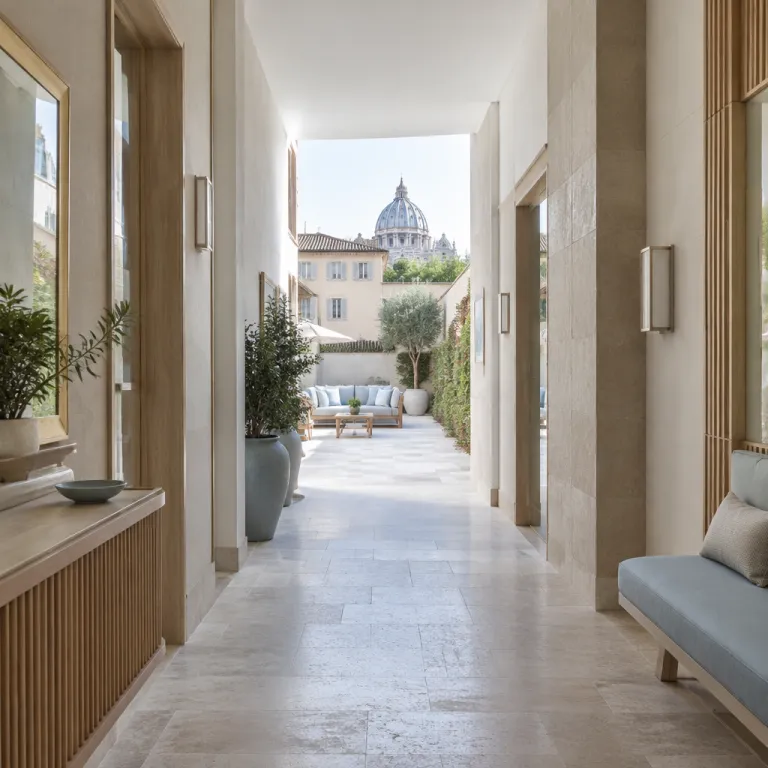
Rome around the Vatican: how luxury hotels frame the eternal city
Rome is a capital city where sacred ritual meets everyday life. In this city of Italy, the Vatican City enclave shapes the skyline and sets a uniquely serene rhythm for guests staying nearby. Any luxury or premium hotel booking website focused on this centre must balance spiritual calm with access to the most vibrant Roman streets.
Within Roma, the municipality spans about 1,287 km², yet the area around Saint Peter’s Square feels like an intimate village. High level travellers want a refined base that keeps them close to the pope’s liturgies while still offering quick access to the wider city Italy experience. That is why the best curated properties sit within walking distance of the basilica, yet remain discreetly tucked into quiet lanes or overlooking a hidden piazza.
Rome is called the eternal city because its ancient layers remain visible in daily routines. When you book in this part of Rome Italy, you sleep beside the heart of the Roman Catholic Church and only a short ride from the Roman Forum and Palatine Hill. The local government, led by mayor Roberto Gualtieri, operates with a special metropolitan status to protect this ancient heritage while still welcoming international visitors in search of la dolce vita.
Hidden gem neighbourhoods near Vatican City for refined stays
Choosing the right neighbourhood in city Rome transforms a simple stay into a deeply Roman experience. Around Vatican City, three micro districts stand out for luxury travellers: Borgo Pio, Prati, and the quieter slopes toward Monte Mario. Each offers a different level of immersion in Italian daily life while keeping you close to Saint Peter’s Square and the pope’s ceremonies.
Borgo Pio sits between the colonnades of Peter Square and the ancient walls, with narrow streets that still echo the Middle Ages. Here, premium hotels often occupy former townhouses, giving guests views over tiled roofs, a hidden square, or a small piazza where locals gather for espresso. A refined example of this urban charm is highlighted in this guide to refined Roman charm near the Spanish Steps, which shows how central properties can blend heritage with contemporary comfort.
Prati, just north of Vatican City, feels more like a residential city Italy quarter, with wide avenues and large 19th century buildings. Luxury hotels here appeal to guests who want elegant shopping streets, quick metro access to the centre, and quieter evenings after visiting Ancient Rome sites. From Prati, you can reach the Trevi Fountain, the Roman Forum, and the historic centre in minutes, yet return to a calm, structured neighbourhood that reflects modern Italy Rome.
Designing a luxury stay around Rome’s sacred and ancient rhythm
Planning a premium stay near Vatican City means aligning your schedule with both liturgical time and sightseeing flows. Many travellers choose early morning for visiting Saint Peter’s Basilica and Peter Square, then retreat to their hotel spa or rooftop while the centre grows crowded. Late afternoon becomes ideal for crossing the Tiber toward the historic centre and exploring the Trevi Fountain or a quiet piazza near the Roman Forum.
High end booking platforms now curate stays that weave together Ancient Roman heritage and contemporary comfort. Some itineraries pair a private guide on Palatine Hill with a wine tasting focused on regional Lazio labels, creating a direct link between the Roman Empire’s agricultural past and today’s Italian terroir. Others suggest extending your cultural journey beyond city Rome, as shown in this feature on the Uthina archaeological route in Tunisia, which mirrors how Ancient Rome projected its influence across the Mediterranean.
Within the Vatican area, the rhythm of life still reflects centuries of Western Christianity. When was Rome founded? Traditionally 21 April 753 BC. What is Rome’s population? Roughly 2.75 million in the city proper. Why is Vatican City inside Rome? The Lateran Pact made the Holy See a sovereign state within the city limits in 1929. These factual anchors help travellers understand why Rome famous sites cluster so tightly around this spiritual core and why staying nearby offers such a concentrated experience of history.
From Ancient Rome to the Middle Ages: layers you feel from your hotel
Staying near Vatican City places you at a crossroads of Ancient Rome, the Middle Ages, and the modern Italian Republic. Walk ten to fifteen minutes from many luxury hotels and you move from the colonnades of Peter Square to medieval lanes, then to Renaissance palaces that once housed cardinals of the Roman Republic’s successor states. This density of history is rare even within Western Europe.
Although the Vatican area is not home to the Roman Forum or Palatine Hill, your concierge can arrange private transfers or walking tours that connect these Ancient Roman sites with your stay. Many premium itineraries start at the Forum, continue through the large archaeological expanse of Palatine Hill, and end with a sunset aperitivo back near Vatican City, allowing guests to compare imperial power with papal influence. Along the way, guides often reference how the Roman Empire’s collapse in the western half led to the rise of the papacy as a stabilising force during the Middle Ages.
Even within the Vatican district, echoes of earlier eras remain visible in churches such as Santa Maria in Traspontina and Santa Maria della Pietà in Camposanto dei Teutonici. From some hotel terraces, you can trace the line of the ancient walls that once defended the city of Italy against invasions. This constant visual dialogue between eras is what makes Rome Italy such a compelling base for travellers who care about history as much as comfort.
Hidden gems beyond the postcard: quiet corners near the Vatican
Many guests arrive expecting only crowds around Saint Peter’s Square and the Vatican Museums, yet the surrounding streets hide tranquil corners. One such place is the small piazza in front of Santa Maria in Trastevere, reachable by a short taxi ride or a longer walk across the river from the centre. Early in the day, this square offers a calm contrast to the large basilica crowds, letting you feel local life at a slower pace.
Another under appreciated area lies toward the Monte Mario regional park, where some luxury properties enjoy elevated views over city Rome. From these terraces, you see how the eternal city stretches across the Lazio landscape, with domes, ancient ruins, and modern districts forming a single panorama. This vantage point helps guests understand why Rome called the eternal city, as the layers of Roman history appear in one sweeping view.
For travellers who enjoy thematic journeys, some booking platforms now link stays in Rome Italy with cultural routes abroad, such as this article on autumn festival trails in North African oases. These curated combinations echo how the Roman Empire once connected Rome, Ravenna, and distant provinces into a single cultural space. By starting in Vatican City and then exploring other former Roman territories, guests experience history not as a museum, but as a living network of destinations.
Practical booking advice for luxury stays near Vatican City
When choosing a premium hotel near Vatican City, start by defining how you want to balance proximity to Peter Square with access to the wider centre. Properties within 500 metres of the basilica offer unmatched convenience for papal events, but those slightly farther into Prati or toward the river often provide larger rooms and quieter evenings. Check whether your preferred hotel offers private transfers, as traffic restrictions in the centre and declining street parking availability can affect arrival plans.
Use a specialised luxury and premium hotel booking website that clearly indicates walking distances to key sites such as the Trevi Fountain, the Roman Forum, and Santa Maria in Trastevere. The most reliable platforms also highlight sustainability initiatives, from support of local suppliers in Lazio to participation in city Rome conservation programmes. Many now respond to municipal efforts to restore green spaces and historic sites by promoting properties that respect the ancient fabric of Rome Italy.
Finally, consider seasonality and daily timing when visiting this part of city Italy. Early morning entries to the Vatican Museums or Saint Peter’s Basilica reduce waiting times and leave afternoons free for exploring other Roman districts. Always carry a water bottle in summer, use public transport in the centre when possible, and rely on concierges who understand both the ceremonial calendar of the pope and the everyday rhythm of la dolce vita in the eternal city.
Key figures for luxury travel around Rome and Vatican City
- Rome’s municipality covers about 1,287 km², making it one of the largest city territories in Western Europe; this scale explains why choosing the right centre neighbourhood near Vatican City is crucial for efficient sightseeing.
- The population of the municipality stands at roughly 2.75 million people, so premium hotels that offer quiet courtyards or elevated views provide valuable respite from the dense urban life of city Rome.
- Rome’s GDP per capita is estimated at around 40,000–45,000 euros per person, reflecting a diversified economy where tourism, culture, and government services coexist around the historic core and Vatican City.
- The city of Italy known as Roma traces its foundation to 21 April 753 BC, meaning luxury guests sleep within a living museum where Ancient Roman, Middle Ages, and modern layers overlap in a single urban fabric.
- Official data shows that Rome functions as the capital of both Italy and the Lazio region, with a strong mayor–council system that supports long term conservation of Ancient Rome monuments while promoting high level tourism infrastructure around the Vatican and the wider centre.
FAQ about luxury stays near Vatican City in Rome
How close should I stay to Saint Peter Square for a luxury visit?
For guests focused on papal events and early visits to Saint Peter’s Basilica, staying within a 5 to 10 minute walk of Peter Square is ideal. This radius keeps you near Vatican City while still offering access to refined restaurants and quieter streets in Borgo Pio or Prati. If nightlife and shopping in the historic centre matter more, consider a property slightly farther away with faster links to the Trevi Fountain and the Roman Forum.
Is the Vatican area convenient for exploring the rest of Rome?
Yes, the Vatican district sits on the western side of the Tiber but remains well connected to the wider centre by metro, buses, and taxis. From most luxury hotels near Vatican City, you can reach the Roman Forum, Palatine Hill, and major piazza landmarks within 15 to 25 minutes. Using public transport in the centre helps you avoid limited parking and recent crackdowns on tourist golf carts.
What hidden gems near Vatican City are worth adding to my itinerary?
Beyond Saint Peter’s Square and the Vatican Museums, consider a walk toward Monte Mario regional park for panoramic views over the eternal city. A short ride brings you to Santa Maria in Trastevere and its lively square, which feels very different from the ceremonial spaces of Vatican City. You can also explore lesser known churches and cloisters in Borgo and Prati that reveal quieter aspects of Roman religious life.
How does Rome protect its ancient heritage while welcoming luxury tourism?
Rome operates with dedicated urban planning laws, UNESCO protections, and partnerships with the Holy See and Italian cultural institutions. These mechanisms safeguard Ancient Rome monuments, from the Roman Forum to key churches, while allowing high level hospitality projects near Vatican City. Luxury hotels that respect building regulations and support local initiatives contribute directly to long term conservation.
Why is Vatican City located inside the city of Rome?
Vatican City exists as an independent state within city Rome because of the Lateran Pact, which formalised the Holy See’s sovereignty inside the Italian capital. This arrangement allows the pope to lead the Catholic Church from a distinct territory while remaining physically embedded in the historic centre of Rome Italy. For travellers, it means that a single luxury stay can combine state level ceremonial events with everyday Roman neighbourhood life.
References
- UNESCO World Heritage Centre – Historic Centre of Rome, the Properties of the Holy See in that City Enjoying Extraterritorial Rights and San Paolo Fuori le Mura.
- Comune di Roma Capitale – official tourism and statistics portals for Roma and the Lazio region.
- Holy See Press Office – schedules and information regarding papal liturgies and Vatican City events.