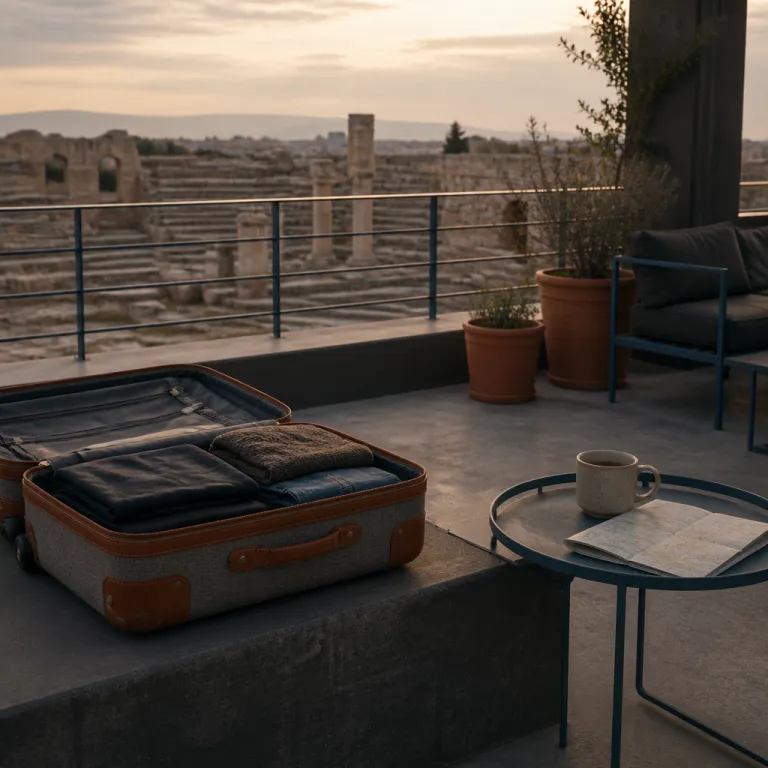
Uthina archaeological site Tunisia becomes a structured cultural route
Uthina archaeological site Tunisia has shifted from quiet hillside ruins to a clearly signposted route linking its amphitheater, Great Baths and Capitol. The Tunisian Ministry of Tourism now frames the ancient Roman city of Uthina, also known as Oudhna, as a flagship archaeological site in north Africa, with guided tours, audio guides and a mobile app that map a coherent narrative through the landscape. For luxury travelers based in Tunis, this well preserved complex offers a good half day escape from the city’s traffic and a deeper sense of how ancient roman life once unfolded just 30 kilometres south.
The new pathway threads through the large amphitheater, where the central arena is cut into the rock and the tiers remain remarkably intact. From there, visitors move towards the large public baths, sometimes called the baths Laberii, where cisterns, hypocausts and fragments of mosaic floors illustrate how public baths structured social life in this roman settlement. Informational signage explains how the legion of the XIII Gemina anchored the site Oudhna in a network of archaeological sites that stretched across sites Tunisia and into wider north Africa.
Beyond the baths, the route climbs towards the Capitol, crossing residential terraces and smaller archaeological remains that show how tunisia Uthina blended Berber and roman influences. Panels along the way reference objects now held in the Bardo Museum and the Museum Tunis, encouraging travelers to pair a visit to the archaeological site with time in these institutions back in the capital. The initiative is part of Tunisia’s broader cultural tourism strategy, which aims to rebalance the image of tunisia from a pure beach destination towards a country where archaeological sites, from Carthage to Dougga and Oudhna archaeological remains, carry equal weight.
How Uthina compares to Carthage and Dougga for discerning visitors
For travelers who already know Carthage and Dougga, Uthina archaeological site Tunisia offers a quieter, more contemplative experience with fewer tour buses and more open space. Carthage spreads along the coast and Dougga rises in the hills, while Uthina sits in gently rolling countryside located north of the highway that links Tunis with the interior, making it easy to fold into a city stay without sacrificing comfort. The amphitheater here feels more intimate than at El Jem, and the central arena carved into the ground gives a visceral sense of scale that many large sites lack.
Where Carthage disperses its ruins across multiple zones, this archaeological site concentrates its highlights along a single loop, which is good news if you prefer structured routes over scattered fragments. The baths complex, including the so called baths fishing and the baths Laberii, shows how public baths functioned as large public hubs, and the surviving cisterns underline the engineering that sustained daily life. Signage also references the enigmatic “baths fishing angels” mosaics now in the Bardo Museum, tying the open air ruins to the curated collections of Museum Tunis and reinforcing how tunisia Uthina fits into a wider museum network.
For a luxury base in the capital, properties near Via Nazionale and Termini in Rome are often used as benchmarks for urban comfort, and in Tunis you should look for similar standards of service and location. Travelers who appreciate an elegant neoclassical stay such as the Esposizione Palace Hotel Roma in Italy will find that high end Tunis hotels around the lakefront and central business district offer comparable ease for day trips to archaeological sites. From these addresses, private drivers or curated local tour operators can reach site Oudhna in under an hour, allowing you to spend unhurried time at the amphitheater, the public baths and the Capitol before returning to a polished city base.
Practical logistics and hotel strategies for an Uthina focused stay
Reaching Uthina archaeological site Tunisia is straightforward from Tunis, with the ruins located north of Oudna village and roughly 30 kilometres south of the capital by road. Local tour operators, working alongside the Tunisian Ministry of Tourism and municipal partners, now run scheduled excursions that include transport, guided walks through the amphitheater and baths, and time to explore the cisterns and residential quarters. Independent travelers can also hire a private car through their hotel concierge, which is often the most comfortable option if you are combining multiple archaeological sites in a single day.
On site, the new route uses informational signage, printed brochures and an audio guide to lead visitors through the amphitheater, the large public baths, the Capitol and surrounding quarters in about two to three hours. Interactive exhibits and augmented reality elements help contextualize the ancient roman city plan, while shaded rest areas and a small public visitor center make the experience more comfortable in the north Africa heat. Official guidance for guests is simple and practical ; “Wear comfortable shoes. Bring sun protection. Check local weather forecasts.”
Back in Tunis, pairing Uthina with other experiences can shape a richer itinerary that still feels relaxed and luxurious. Travelers who value a refined base for urban exploration, similar in spirit to a property like Galles Hotel Roma in Italy, should look for Tunis hotels that combine strong concierge teams with easy access to both the medina and the highway south. From there, you can alternate days between archaeological immersion at tunisia Uthina, time with mosaics from Oudhna archaeological excavations at the Bardo Museum, and more adventurous extensions into the desert using specialist operators who run luxury desert camps in southern Tunisia, as profiled in this guide to under Saharan skies on myvaticanstay.com.