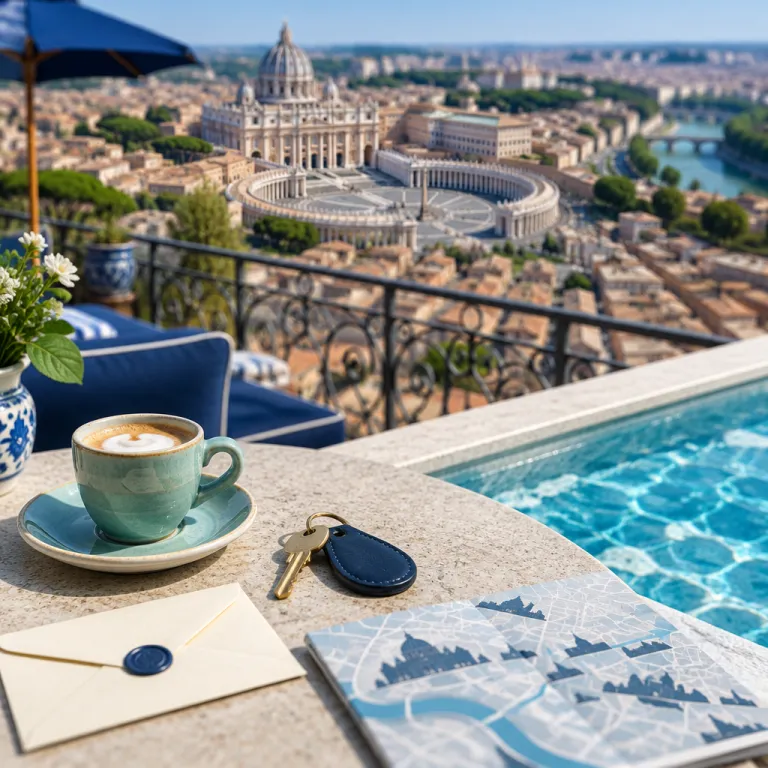
Where is the Vatican and why its location shapes every luxury stay
To understand where the Vatican is, picture the heart of Rome enclosed within ancient walls. Vatican City is a sovereign city state on the west bank of the Tiber River, entirely surrounded by the Italian capital and seamlessly woven into the urban fabric of Rome. This unique position means every luxury hotel booking near the Holy See must balance the intimacy of a tiny state with the energy of a major European city.
The territory of Vatican City covers less than half a square kilometre, yet it concentrates spiritual power, papal institutions, and priceless art collections in one compact enclave. Guests often walk from their hotel in central Rome to St. Peter’s Square in under fifteen minutes, crossing from Italy into Vatican City without even noticing a border. That effortless transition between Roman neighbourhoods and the Vatican makes it easy to plan premium stays that combine sacred spaces, museums, and refined Italian dining.
Because the Vatican is a landlocked enclave, every luxury traveller must technically sleep in Rome while visiting the Pope’s city and its holy sites. This geography creates a ring of high end properties around St. Peter’s Basilica and the Vatican Museums, each offering privileged access to the papal heart of the Catholic Church. When you plan to visit the Vatican attractions, the exact location of your hotel within this ring will define how you experience both the city state and the wider Roman lifestyle.
Staying beside Saint Peter Basilica and the Vatican Museums
The most coveted addresses for premium stays cluster around St. Peter’s Basilica and the Vatican Museums, where the skyline is dominated by Michelangelo’s dome. From these streets, guests can walk to St. Peter’s Square at dawn, watching Vatican City gradually awaken as the Swiss Guard changes shifts at the papal entrances. This proximity turns a simple plan to visit the Vatican into a sequence of intimate moments with the city state’s daily rhythm.
Many travellers choose refined residences along Via della Conciliazione, the grand avenue that links the Tiber River to St. Peter’s Square and the Apostolic Palace. From a terrace here, you can see the façade of St. Peter’s Basilica glow at sunset, while the bells of Vatican City echo across Rome. One elegant Vatican hideaway with front row views, detailed on this guide to an exclusive stay beside Saint Peter, illustrates how a carefully chosen address can frame the basilica as your private backdrop.
Choosing a hotel near the Vatican Museums also gives you a strategic advantage for early entry to the Sistine Chapel and the papal art collections. When you stay within 500 metres of the museum entrance, you can reach the Vatican Museums on foot before the main tour groups arrive, enjoying quieter corridors and a more contemplative atmosphere. In this part of the city, luxury properties often provide concierge teams fluent in Italian and English, ready to secure timed tickets and private guides for your Vatican visit, and many guests use nearby metro stops such as Ottaviano or Cipro to move quickly between districts.
Understanding the Vatican as a city state for smarter trip planning
Vatican City is not just a religious centre; it is a fully independent city state with its own governance, security, and diplomatic corps. This status was formalised by the Lateran Treaty between the Holy See and Italy, which recognised the Vatican State as distinct from Rome while remaining physically embedded in the Italian capital. For luxury travellers, this political reality influences everything from security checks at St. Peter’s Square to the ceremonial role of the Swiss Guard around the Apostolic Palace.
Because the Vatican is a city state, the head of state is the Pope himself, currently Pope Francis, who also serves as the spiritual head of the Roman Catholic Church. When you plan to attend Vatican events such as papal audiences or liturgies in St. Peter’s Basilica, you are effectively entering the ceremonial life of a sovereign state. This dual role of Pope Francis as both head of state and religious leader explains the heightened protocol, the presence of the Swiss Guard, and the careful coordination between Italian police and papal security services in the city.
Time management is crucial in such a compact yet complex environment, especially for high end itineraries that combine the Vatican Museums, the Sistine Chapel, and Roman fine dining. A detailed guide on how Vatican time shapes a luxury trip shows how opening hours, liturgical schedules, and city traffic patterns interact. When you understand where the Vatican sits within Rome and how the city state operates hour by hour, you can align spa appointments, private transfers, and exclusive museum access with remarkable precision.
From papal states to Pope Francis : history that enriches your stay
Every luxury stay near the Vatican is enriched by understanding how this tiny state evolved from the vast Papal States that once stretched across central Italy. For centuries, popes such as Pope Pius IX ruled extensive territories, blending spiritual authority with temporal power over multiple Italian regions. The loss of these lands and the eventual Lateran Treaty created modern Vatican City, concentrating papal influence into a compact capital that still shapes global Catholicism.
Walking from your hotel through Roman streets toward St. Peter’s Square, you are tracing routes once used by pilgrims, diplomats, and artists serving successive popes. The Apostolic Palace, which rises beside St. Peter’s Basilica, has housed generations of pontiffs, from Pope Pius to Pope Francis, each leaving architectural and artistic marks on the Vatican. When you visit Vatican sites with a knowledgeable guide, stories of the Papal States, the Pope’s city, and the evolution of the head of state role bring the stones of the city to life.
The Vatican Museums and the Sistine Chapel are the most visible legacies of this history, preserving masterpieces commissioned by the papal court over many centuries. As you move through the museums, you encounter Roman sculptures, Renaissance frescoes, and baroque galleries that reflect both spiritual ambitions and statecraft. Staying in a refined Roman hotel that offers curated access to these collections allows you to connect the past of the Papal States with the present day city state in a deeply personal way.
Languages, culture, and etiquette around the holy Vatican
Although Latin remains a ceremonial language of the Church, the official language of the Vatican City administration is Italian, which aligns daily life with surrounding Rome. In practice, most staff in luxury hotels near Vatican City speak several languages, and English is widely used for guest services, private tours, and high end dining reservations. When you visit Vatican sites, you will hear announcements in multiple languages, yet a few Italian phrases still open doors and create warmer connections.
Understanding cultural expectations around the holy Vatican helps you move gracefully between your hotel and sacred spaces such as St. Peter’s Basilica. Dress codes apply inside the basilica, the Sistine Chapel, and some areas of the Vatican Museums, requiring covered shoulders and knees for both men and women. Many premium hotels in Rome now brief guests on these norms at check in, ensuring that a spontaneous visit to the Vatican after breakfast does not end with being turned away at a security checkpoint.
Etiquette also extends to behaviour in St. Peter’s Square, where pilgrims gather for papal blessings and audiences with Pope Francis. Even when you are staying in a contemporary Roman property with a lively rooftop bar, the transition to the Pope’s ceremonial spaces calls for a quieter, more reflective attitude. Balancing this respect with the pleasures of Italian hospitality is part of what makes a stay near Vatican City feel both intensely human and gently elevated.
Designing exclusive Vatican getaways from Rome and beyond
Knowing exactly where the Vatican sits within Rome allows you to design exclusive itineraries that extend beyond the city state’s walls. Many high end travellers pair a stay near St. Peter’s with a second stop on a quieter coast, using Rome’s transport links to reach refined seaside towns after an intense schedule of Vatican visits. A detailed feature on a fortified fishing town with a calmer luxury coastline shows how contrasting destinations can frame the Vatican experience.
Within Rome itself, the most successful Vatican focused stays usually combine three elements; proximity to St. Peter’s Square, curated access to the Vatican Museums and the Sistine Chapel, and seamless transfers to other Roman districts. From a hotel in the Prati or Borgo neighbourhoods, you can walk to St. Peter’s Basilica in minutes, then reach the historic centre or Trastevere by private car for dinner. This pattern allows you to experience the holy Vatican at quieter times of day while still enjoying the full spectrum of Roman nightlife and gastronomy.
Some travellers also weave in thematic experiences linked to the papal heritage of the city, such as visits to the Lateran complex or churches associated with earlier popes like Pope Pius. These excursions highlight how Vatican City, the broader Roman landscape, and the memory of the Papal States remain intertwined across Italy. When your hotel concierge understands both the geography of Vatican City and the cultural layers of Rome, they can craft an itinerary that feels genuinely tailored rather than generically luxurious.
Key figures and practical statistics for planning a Vatican focused stay
- Vatican City covers about 0.44 square kilometres, making it the smallest internationally recognised independent state by both area and population according to data from the Holy See and the United Nations; official statistics are published on the Vatican’s website and in UN demographic reports.
- Annual visitors to the Vatican Museums often exceed 6 million people, which places the museums among the most visited art institutions in the world and makes timed entry essential for a comfortable high end experience; this figure is regularly cited in reports by the Vatican Museums and international tourism studies.
- St. Peter’s Basilica can hold around 15 000 to 20 000 worshippers during major liturgies, so attending a papal Mass or audience requires advance planning and coordination with your hotel concierge for tickets and transfers; capacity estimates are drawn from Vatican ceremonial guidelines and architectural surveys.
- The Swiss Guard, which protects the Apostolic Palace and the Pope, maintains a force of roughly 135 soldiers, all of whom are Swiss nationals and practising Catholics, reflecting a tradition that dates back to the early sixteenth century; the corps publishes these figures in its official recruitment information.
- Walking time from many luxury hotels in the Prati district to St. Peter’s Square is typically 10 to 15 minutes, while transfers by car from central Roman areas such as Piazza di Spagna usually take 15 to 25 minutes depending on traffic, based on average journey times reported by local transport services.
FAQ about where the Vatican is and how to stay nearby
Where is the Vatican located in relation to Rome and Italy ?
Vatican City is an independent city state entirely enclosed within the city of Rome in central Italy. It lies on the west bank of the Tiber River, opposite many of the historic Roman districts. Travellers usually stay in Rome and walk or drive a short distance to reach the Vatican’s walls.
Can you sleep inside the Vatican City as a regular traveller ?
There are no conventional hotels open to the public inside Vatican City, so visitors stay in surrounding Roman neighbourhoods such as Prati, Borgo, or the historic centre. From these areas, it is easy to walk to St. Peter’s Square, the Vatican Museums, and the Sistine Chapel. Luxury and premium properties nearby often market themselves as Vatican view or St. Peter’s Basilica view hotels.
Which area is best for luxury hotels near the Vatican ?
For high end stays focused on the holy Vatican, the streets around Via della Conciliazione, Borgo Pio, and the Prati district offer the best balance of proximity and services. These areas place you within walking distance of St. Peter’s Basilica and the Vatican Museums while still providing refined Roman restaurants and shopping. Many properties here specialise in arranging private Vatican experiences and papal audience logistics.
How long should I plan for a Vatican focused visit from my hotel ?
Most luxury travellers allocate at least one full day for the Vatican Museums, the Sistine Chapel, and St. Peter’s Basilica, plus another half day for St. Peter’s Square and a papal audience if available. With a well located hotel, you can split these visits across mornings to avoid crowds and heat. Longer stays of two or three nights near the Vatican allow for a more relaxed rhythm and deeper engagement with Roman culture.
Do I need to speak Italian to stay near the Vatican ?
Italian is the official language of daily life in Rome and the Vatican administration, but English is widely spoken in luxury hotels, restaurants, and by licensed guides. Learning a few Italian phrases is appreciated, especially when interacting with local staff or visiting less touristy Roman areas. For complex arrangements such as private Vatican tours or booking papal audience tickets, your hotel concierge will usually handle communication in your preferred language.