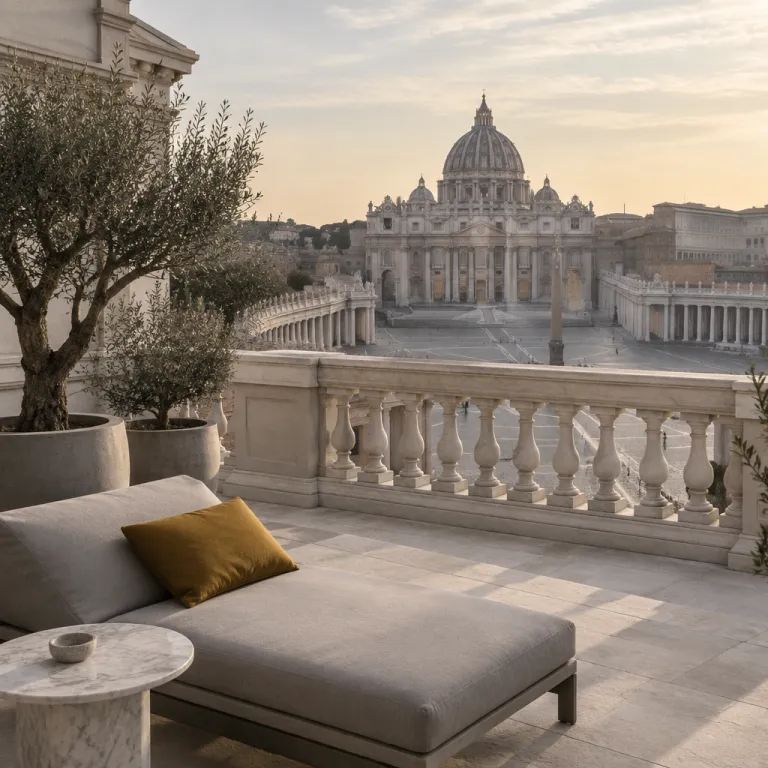
Understanding Vatican City’s location for luxury trip planning
Many travelers planning a luxury stay around the Vatican first wonder which country Vatican City belongs to. The answer shapes every practical detail of your booking, because this tiny city-state is an independent sovereign territory fully enclosed within Rome. You sleep in Italy, yet you wake up steps from the spiritual heart of the Catholic Church.
Vatican City is a landlocked enclave of about 0.44 km², surrounded on all sides by the Italian capital. When you book a premium hotel near the Vatican, you are technically staying in Italy, but you cross an invisible international border when you walk into Saint Peter’s Square or the Vatican Museums. This interplay between Italian city life and the Vatican’s sacred precincts is what makes high-end stays here so compelling for discerning guests.
The Holy See governs Vatican City as a city-state, and the pope serves as its absolute monarch while also leading the worldwide Catholic Church. This unique status, rooted in the 1929 Lateran Treaty with the Italian state, means that luxury travelers enjoy Italian hospitality while accessing a separate sovereign microstate in a matter of minutes. Understanding this balance between modern Italy and the legacy of the former Papal States helps you choose the right hotel, the right neighborhood, and the right level of proximity to Saint Peter’s Basilica.
Where to stay near the Vatican City for a premium experience
Once you understand how Vatican City fits within the Italian state, the next step is choosing where to sleep in Rome for an exclusive Vatican-focused stay. The most coveted addresses sit between the historic ager Vaticanus area and the Tiber River, placing you within a short walk of Saint Peter’s Basilica and Saint Peter’s Square. Here, five-star properties and refined guest houses offer views of the basilica dome, curated concierge services, and seamless access to the Vatican each morning.
For travelers who want a refined yet intimate atmosphere, consider an elegant Vatican guest house such as the property presented in this guide to an exclusive Vatican stay near Saint Peter. These addresses combine Italian design with attentive service, allowing you to move easily between your room, the surrounding Roman neighborhoods, and the Vatican Museums. You remain in the Italian state for accommodation and services, while the holy territory of Vatican City lies just beyond the colonnades of Saint Peter’s Square.
Premium hotels in this part of Rome often arrange private transfers, timed entry to the Sistine Chapel, and curated tours of the papal apartments. Many concierges are well versed in the history of the Papal States, the Roman Question, and the Lateran Treaty, which helps guests appreciate why this small Vatican enclave functions as a fully independent state. When you select a property, ask about walking distance in metres to Saint Peter’s Basilica, views of the dome or the city skyline, and any partnerships with licensed Vatican Museums guides. For instance, some boutique hotels sit roughly 400 metres from the square, while others around 800–900 metres trade a slightly longer walk for quieter streets and rooftop terraces with panoramic basilica views.
Designing an exclusive Vatican itinerary around your hotel
Knowing that Vatican City is a separate microstate within Rome clarifies how to structure your days between the Italian capital and the holy territory. You might start with an early-entry visit to the Vatican Museums, followed by a private Sistine Chapel viewing and a quiet moment in Saint Peter’s Basilica. Returning to your luxury hotel in Rome, you can then enjoy Italian cuisine and spa treatments before an evening stroll back to the square.
To weave your accommodation into the experience, use resources such as this guide to designing a Saint Peter Basilica tour around an exclusive Vatican stay. This approach treats your hotel as a strategic base between the Italian state and the city-state, allowing you to move efficiently between museums, churches, and Roman landmarks. Many high-end properties coordinate licensed guides who explain how the Papal States once controlled large parts of central Italy before the Quirinal Palace became the residence of the Italian president.
Plan at least one full day focused on the Vatican City territory, including the Vatican Museums, the Sistine Chapel, and the necropolis beneath Saint Peter’s Basilica. Another day can highlight broader Rome, from the Quirinal Palace to the Archbasilica of Saint John Lateran, which remains the cathedral of the bishop of Rome, the pope. This balance between the sacred enclave of Vatican City and the surrounding Italian metropolis gives your trip both spiritual depth and urban sophistication.
History, papal heritage, and how they shape today’s luxury stays
Understanding which country surrounds Vatican City requires a brief look at history, because the current city-state emerged from centuries of negotiation between the Papal States and the Kingdom of Italy. For centuries, popes ruled extensive territories across central Italy, and the loss of these lands created the Roman Question that dominated relations between the Holy See and the Italian state. The Lateran Treaty finally resolved this dispute, recognizing Vatican City as an independent territory while confirming Rome as the capital of unified Italy.
This historical context still influences how luxury travelers experience the area around the Vatican. When you walk from your hotel in Rome to Saint Peter’s Square, you cross the same ager Vaticanus plain where ancient Roman circuses once stood and where Saint Peter was believed to be martyred. The transformation of this land into the spiritual centre of the Catholic Church, crowned by Saint Peter’s Basilica and the Vatican Museums, explains why Vatican City attracts guests seeking both culture and contemplation.
Names such as Pope Pius XII, Pope Leo XIII, and Pope Francis appear throughout local tours, from the papal apartments to the museums’ modern sections. Guides may reference Pope Pius and other pontiffs when explaining how the Swiss Guard evolved into today’s colourful yet highly trained security corps protecting the pope and the Vatican City State. As one concierge near the basilica likes to tell guests, “You cross a border in five minutes, but you cross twenty centuries in a single afternoon.” As you relax in your Italian hotel suite after a day of visits, this layered history turns a simple city break into a deeply textured journey between states, churches, and centuries.
Practicalities for guests: borders, security, and Vatican citizenship
Once you grasp that Vatican City forms its own sovereign state inside Italy, practical questions follow about borders, security, and documentation. Visitors enter the Vatican City territory from Rome without passport checks, because the border between the Italian state and the city-state is open for tourism. You remain subject to Italian law in your hotel, yet you step into a distinct jurisdiction when you pass the colonnades of Saint Peter’s Square or the gates near the Vatican Museums.
Vatican citizenship is extremely limited and tied to service to the Holy See, so luxury travelers always retain their own national passports while staying in Rome. The Swiss Guard, who protect the pope and the papal palaces, are a visible symbol of Vatican sovereignty, and their presence reassures guests about security standards. When you book high-end accommodation, staff can explain dress codes for entering Saint Peter’s Basilica, visiting the Sistine Chapel, or attending a general audience with Pope Francis in the square.
Because your hotel lies in Italy, you benefit from Italian consumer protections, transport infrastructure, and healthcare access, while enjoying immediate proximity to the independent Vatican City State. Transfers from Rome airports typically take about 40 to 60 minutes by private car, depending on traffic and the exact city district, according to standard Rome transport information. Ask your concierge for precise walking distances to Saint Peter’s Square, the Vatican Museums entrance, and nearby metro stations, so you can move smoothly between the holy territory and the wider Italian capital.
Choosing a luxury booking platform for exclusive Vatican getaways
Travelers who understand that Vatican City is a separate jurisdiction within Rome often look for booking platforms that specialise in this delicate interface between the Italian capital and the city-state. A well-curated luxury and premium hotel booking website focused on the Vatican area will highlight properties within a few hundred metres of Saint Peter’s Basilica and the Vatican Museums. It will also explain clearly how the Italian state and the Vatican City State interact in terms of access, security, and guest services.
When evaluating such platforms, check whether they provide detailed neighbourhood guides to the ager Vaticanus zone, Saint Peter’s Square, and nearby Rome districts. Look for information on views of the basilica, proximity to the Sistine Chapel entrance, and options for private Vatican Museums tours outside general opening hours. Some sites also analyse broader hospitality trends, such as this report on how new Mediterranean investments affect discerning travelers, which helps you compare the Vatican area with other emerging luxury destinations.
A trustworthy platform will reference the historical and political context of the Papal States, the Lateran Treaty, and the role of the Quirinal Palace in Italian governance, without overwhelming you with academic detail. It should also clarify how papal events, such as a general audience with Pope Francis or major Catholic Church celebrations, affect hotel availability and pricing near Vatican City. By combining precise geographic information with cultural insight, the right booking website turns your Vatican stay into a carefully orchestrated experience between two intertwined states.
Key statistics for planning an exclusive Vatican stay
- The Vatican City territory covers about 0.44 km², making it the smallest independent state in the world by both area and population, while Rome spans more than 1 200 km², so hotel options are concentrated outside the city-state itself (data from the Holy See and the Italian National Institute of Statistics, ISTAT).
- The Vatican Museums welcome around 6 million visitors per year, which means premium skip-the-line or early-access tickets are strongly recommended for guests staying near Saint Peter’s Basilica (figures reported by the Vatican Museums administration in its annual statistics).
- Saint Peter’s Square can accommodate roughly 80 000 people during a papal general audience or blessing, so luxury travelers should book hotels several months in advance for major Catholic Church events (capacity estimates from Vatican City authorities and official event planning guidelines).
- Walking distance from many high-end hotels near the ager Vaticanus area to the Vatican Museums entrance is typically between 500 and 900 metres, allowing guests to reach the Sistine Chapel in less than 20 minutes on foot (measured using standard Rome city maps and common visitor routes).
- Average taxi transfer time from Rome Fiumicino Airport to the Vatican area ranges from about 40 to 60 minutes, depending on traffic, which helps travelers plan arrival times for prebooked Vatican Museums or Saint Peter’s Basilica tours (data compiled from Rome airport transport information and local taxi guidelines).
FAQ about Vatican City, Rome, and luxury hotel bookings
What country is Vatican City in, and where will my hotel be located ?
Vatican City is an independent city-state fully enclosed within the city of Rome, but all luxury hotels for visitors are located in Italy, not inside the Vatican territory. You will sleep in the Italian state, usually within a short walk of Saint Peter’s Basilica and the Vatican Museums. Each day, you cross from Italy into Vatican City simply by walking through Saint Peter’s Square or nearby entrances.
Can I book a hotel inside the Vatican City itself ?
There are no standard hotels for tourists inside the Vatican City territory, because most buildings are reserved for papal residences, administrative offices, museums, and the Catholic Church. Luxury and premium accommodation is instead concentrated in Rome, especially in the ager Vaticanus area around Saint Peter’s Basilica. This arrangement lets you enjoy Italian hospitality while remaining extremely close to the city-state.
How close can a luxury hotel be to Saint Peter Basilica and the Sistine Chapel ?
Many high-end properties in Rome are located within 300 to 900 metres of Saint Peter’s Basilica and the Vatican Museums entrance, which houses the route to the Sistine Chapel. When choosing a hotel, check the walking distance in metres and the time needed to reach Saint Peter’s Square or the museums. The best luxury booking platforms clearly indicate these distances so you can plan early-morning visits and papal events.
Do I need a passport to enter the Vatican City from my hotel in Rome ?
For standard tourism, you do not pass through passport control when walking from Rome into Vatican City, because the border between the Italian state and the city-state is open for visitors. You still need valid travel documents to enter Italy itself, where your hotel is located. Once in Rome, you can move freely between your accommodation, Saint Peter’s Square, the Vatican Museums, and other holy sites.
How do papal events affect luxury hotel availability near the Vatican ?
Major papal events, such as Easter celebrations, canonisations, or a general audience with Pope Francis that attracts large crowds to Saint Peter’s Square, significantly increase demand for hotels near the Vatican area. Luxury properties often reach full occupancy well in advance, and prices can rise compared with quieter periods. If your trip centres on a specific Catholic Church celebration, reserve your preferred hotel in Rome several months before arrival.