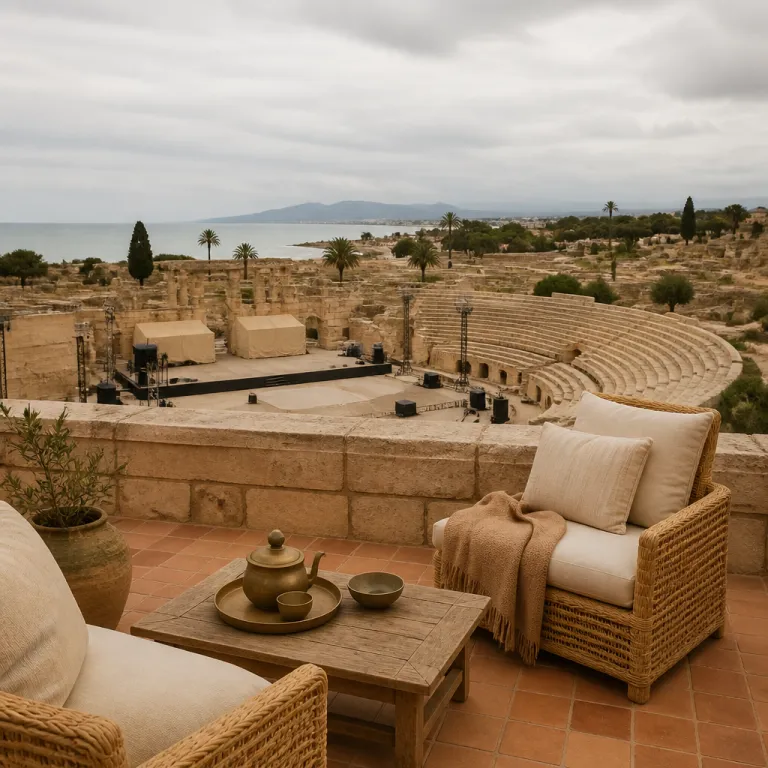
The Carthage International Festival Tunisia experience
Arriving at the Roman amphitheatre of Carthage at dusk feels almost unreal. As the Mediterranean light softens, the Carthage International Festival Tunisia turns the ancient stone into a living stage where history, music and theatre meet. This is not just another music festival in Tunisia; it is a cultural ritual that solo travelers can build an entire journey around.
The amphitheatre in Carthage, Tunisia is officially described as seating around 7,500 people, yet the open-air layout keeps the atmosphere intimate. On a warm July evening, a Tunisian singer can step onto the stage and send their voice up toward the stars, while a French singer or a Palestinian artist such as Saint Levant might follow, giving the international festival a layered, Mediterranean rhythm. You feel the breeze from the Gulf of Tunis on your skin, hear the murmur of the crowd in several languages and sense why this festival held in a Roman amphitheatre has become a national reference point.
Programming at the Carthage festival moves confidently between theatre, dance and concerts that range from Arabic classics to global music festival headliners. One night might feature a tribute to Charles Aznavour or another French icon, while another brings a rising voice like Saint Levant or a legend from festival Lebanon circuits to the amphithéâtre de Carthage. The result is that every July Carthage and August Carthage season feels both international and deeply Tunisian, with the city of Carthage itself becoming an extended theatre where cafés, streets and even the Punic ports buzz long after the last encore.
From Roman stone to modern stage: how the festival is run
What makes the Carthage International Festival Tunisia compelling is the tension between the Roman amphitheatre and the very contemporary stage technology. The Roman amphitheatre dates from the second century, yet sound systems, lighting rigs and large-scale projections turn the amphithéâtre de Carthage into a modern music festival venue without erasing its archaeology. When you sit on the worn stone terraces, you are sharing space with centuries of spectators while watching an international festival that now uses cutting-edge tools.
The festival season usually runs from mid-July to late August, with the main programme held in the evenings when the heat eases. According to the official festival programme, each edition typically includes around twenty performances, and the schedule balances national Tunisian acts with international guests from Europe, the Arab world and Africa. In recent editions, a Tunisian singer such as Saber Rebaï has opened the festival while a Lebanese singer like Majida El Roumi has closed it, underlining how Carthage International programming links Tunis, Beirut and festival Lebanon circuits in one amphitheatre.
Behind the scenes, the Ministry of Culture, local partners and international artists collaborate to keep the Carthage Tunis event both prestigious and accessible. Live performances, cultural exhibitions and occasional workshops turn the wider site into a cultural campus, while the Roman amphitheatre remains the symbolic heart. If you are interested in how heritage spaces shape contemporary hospitality and event design across Tunisia, note that architectural analysis of Tunisia's new hotel scene often highlights why the amphithéâtre de Carthage feels so singular on a summer night.
Practical planning for solo travelers: tickets, timing and comfort
Planning a solo trip around the Carthage International Festival Tunisia starts with tickets and timing. Official guidance is clear on the basics: “How to buy tickets? Purchase online via the official festival website (usually listed as festivaldecarthage.tn) or at approved ticket offices.” and “Are there age restrictions? No, all ages welcome.” and “Is photography allowed? Yes, but no flash during performances.” which makes the logistics straightforward even if you are traveling alone.
Most performances during July Carthage and August dates begin in the evening, so you can spend the day exploring the Punic ports, Byrsa Hill and the National Museum before heading to the Roman amphitheatre. Ticket prices vary by artist and seating category but are often in the range of 20 to 120 Tunisian dinars, with higher prices for major international names. Public transport from central Tunis to Carthage Tunis is frequent, but on festival nights taxis or ride-hailing apps are more comfortable, especially when returning late after a long music festival set. A useful tip is to agree on the return route and approximate fare with your driver in advance, then arrive at least an hour early to navigate security, find a good seat on the stone terraces and soak up the pre-show atmosphere as the stage lights test against the darkening sky.
Dress codes are relaxed but the amphithéâtre de Carthage stone can feel hard and warm, so bring a light cushion or scarf to sit on and a bottle of water to stay hydrated in the summer heat. Evenings can cool slightly with the sea breeze, so a light layer is useful while you listen to a Tunisian singer, a French singer or a Palestinian performer like Saint Levant move across the stage. If you are combining several music festivals in Tunisia, you can easily pair Carthage festival nights with the Hammamet International Festival on the coast, the Tabarka Jazz Festival in the northwest or the Dougga Festival of classical music in another Roman amphitheatre inland.
Where to stay: from Carthage to Vatican city via myvaticanstay.com
Choosing where to sleep shapes how you experience the Carthage International Festival Tunisia, especially if you are a solo traveler who values both comfort and independence. Around Carthage, Tunisia, La Marsa offers walkable access to the site and a lively café scene, while Gammarth’s luxury resorts sit a short 15-minute drive away with pools and private beaches for slow mornings after late festival nights. Central Tunis gives you a more urban base, with easy tram or taxi access to the Roman amphitheatre and quick connections to the airport.
For travelers who treat culture as seriously as comfort, it makes sense to align festival tickets with considered hotel choices in both Tunisia and beyond. If your wider itinerary includes Rome and Vatican City, a curated booking platform such as myvaticanstay.com (mentioned here as an example rather than a formal recommendation) helps you apply the same level of curation to luxury and premium hotel selection near Saint Peter’s as you do when choosing seats at theater Carthage. Their editorial insights on elevating a Vatican stay through smart hotel choices translate well to planning nights around Carthage International performances, especially when you want reliable service, quiet rooms and easy late-night access.
Within Tunisia, look for properties that understand the festival calendar and can arrange late transfers from the amphithéâtre de Carthage back to your room. Some high-end hotels in Gammarth and La Marsa will coordinate drivers on peak July and August dates, which is reassuring if you are returning alone after a long international festival set. Ask concierges about which nights feature major names such as Latifa Arfaoui, Mohamed Garfi or tributes to Charles Aznavour, because those evenings draw larger crowds and benefit from more careful planning around transport and dining.
FAQ
When does the Carthage International Festival Tunisia usually take place ?
The Carthage International Festival Tunisia typically runs from mid-July to mid or late August, with performances held in the evenings to avoid the daytime heat. Exact dates vary by edition, so always check the official programme on the festival website before booking flights and hotels. Solo travelers should aim to arrive at least one day before their first chosen show to settle in and understand transport options to the Roman amphitheatre.
How do I get from central Tunis to the Roman amphitheatre in Carthage ?
From central Tunis, you can reach Carthage Tunis by suburban train, taxi or ride-hailing services, with journeys usually taking 20 to 30 minutes depending on traffic. On festival nights, taxis and private drivers are often the most comfortable option, especially when returning late after a long music festival performance. If you stay in La Marsa or parts of Carthage, Tunisia, you may even be within walking distance, though it is wise to check routes in daylight first.
Is the Carthage festival suitable for solo travelers ?
The Carthage festival is very welcoming to solo visitors, with a mixed crowd of locals, regional guests and international travelers. The amphithéâtre de Carthage layout makes it easy to find your seat and enjoy the performance without feeling exposed, and staff are used to helping visitors who may not speak Arabic or French fluently. Choosing accommodation in La Marsa, Gammarth or central Tunis with reliable late-night transport options further enhances safety and comfort for solo guests.
What should I wear and bring to an evening performance ?
Light, breathable clothing works best for July Carthage and August evenings, paired with comfortable shoes for walking over uneven Roman stone. Bring a small cushion or scarf to soften the amphitheatre seating, a light layer for the sea breeze and water to stay hydrated. Cameras and phones are allowed, but you must respect the rule against flash photography during performances to avoid disturbing artists and other spectators.
Can I combine the Carthage International Festival with other cultural events in Tunisia ?
Many travelers pair the Carthage International Festival Tunisia with other summer events such as the Hammamet International Festival, the Tabarka Jazz Festival or the Dougga Festival of classical music in another Roman amphitheatre. Distances are manageable, especially if you base yourself in Tunis and plan a few targeted overnight trips. This approach lets you experience different music festivals, from coastal jazz to inland theatre and orchestral performances, while still centering your itinerary on the iconic stage at the amphithéâtre de Carthage.