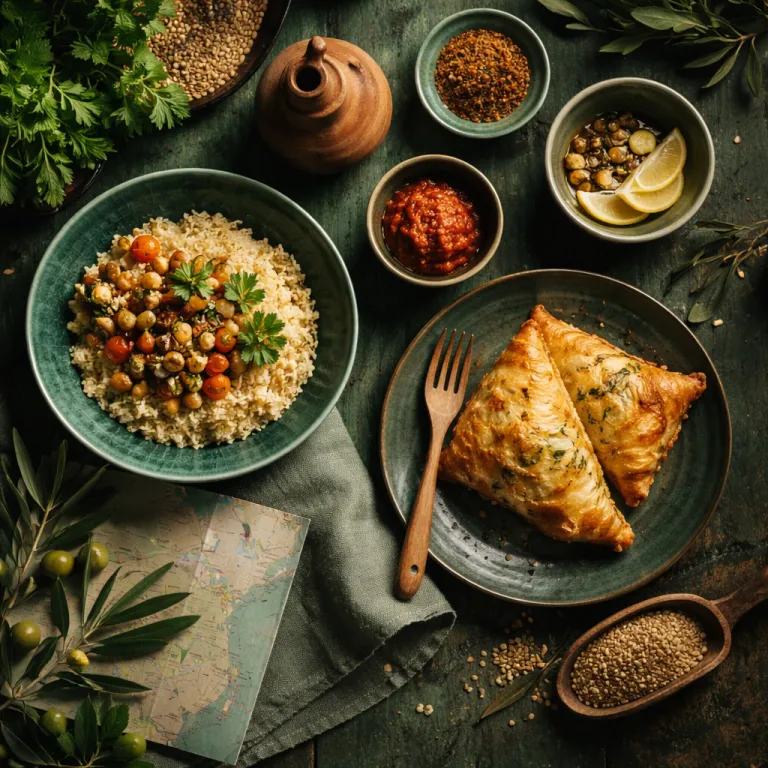
Tunisian cuisine guide for Vatican based luxury travelers
Tunisian cuisine speaks directly to travelers who care about place. In Tunis and across Tunisia, every dish links Mediterranean light with North African depth and a culinary heritage that rewards slow, attentive tasting. When you plan a Vatican stay yet feel drawn south across the sea, this Tunisian cuisine guide becomes a quiet bridge between Saint Peter’s dome and the call to prayer over the Tunis medina.
Start with couscous, the national dish that anchors almost every serious table. At its simplest, couscous is steamed semolina, often served with lamb, fish or vegetables, while in richer regional versions you will meet couscous dishes that fold in chickpeas, pumpkin or even delicate seafood from La Goulette. Many traditional restaurants in the Tunis medina, such as Dar Belhadj or Dar Slah, build entire menus around couscous, offering both classic broths and lighter, coastal interpretations; expect to pay roughly 25–45 TND for a generous plate at these mid range spots.
Harissa defines much of what makes Tunisian food unique. This deep red paste, made from sun dried chilies, garlic and olive oil, appears on tables in both humble street cafés and refined hotel dining rooms, and harissa based sauces quietly lift grilled fish or a simple Tunisian salad into something memorable. When you read menus in dinar, usually written as TND, remember that even modest prices can hide serious technique and a respect for culinary traditions that UNESCO now recognizes in its listing of “Knowledge, know-how and practices pertaining to the production and consumption of couscous” as part of Tunisia’s intangible cultural heritage.
For Vatican guests used to polished service, Tunisian street food offers a different kind of luxury. On any busy Tunisian street in the capital, you will see brik being fried to order, the thin pastry wrapped around tuna, a soft egg and sometimes capers, then deep fried until shatter crisp. That same brik appears in more elaborate Tunisian dishes inside palace like restaurants, where it might be served on porcelain yet still tastes of the street and of travelling Tunisia with your hands rather than a guidebook.
From Tunis medina to La Goulette: where the sea meets the pan
The old medina of Tunis is the natural starting point for any serious Tunisian cuisine guide. Within its narrow lanes, Tunisian chefs, local farmers and street vendors form a quiet ecosystem that keeps traditional Tunisian recipes alive while allowing modern cuisine to evolve. Tunis sits firmly in North Africa, yet its food leans toward the sea, and you feel that pull most clearly when you follow the tramline or a short taxi ride out to La Goulette, the historic port of the capital.
In the medina, focus on street food rather than fast food chains. You will find fricasse sandwiches, small fried rolls filled with tuna, harissa, boiled egg and olives, lined up in bakery windows like edible jewels. These fricasse snacks cost only a few TND, yet they condense Tunisian food culture into a handheld lesson in texture, from the soft crumb to the slight crunch of deep fried crust. Look for busy counters near Bab el Bhar or Marché Central, where office workers queue at lunchtime for quick, satisfying bites, typically between 11:00 and 15:00.
Seafood defines La Goulette, where fish restaurants line the waterfront and waiters carry trays of whole fish for you to choose. Ask for grilled fish served simply with olive oil, lemon and a side of mechouia salad, the roasted pepper and tomato mixture that appears as both a starter and a shared salad across Tunisia. Many Vatican based travelers book hotels with strong in house dining, yet a carefully planned itinerary that pairs Rome’s trattorias with Tunis’s coastal grills shows how different Mediterranean cultures treat the same fish with distinct North African accents.
Even in luxury contexts, the best Tunisian dishes in Tunis remain rooted in street level habits. Order a simple Tunisian salad of tomatoes, onions and cucumbers, then notice how the same base becomes a more elaborate plate when chefs add tuna, egg or grilled peppers for hotel guests. This is where culinary heritage lives: not in museums, but in the way a waiter automatically brings harissa, olives and olive oil to your table before you even ask.
Cap Bon and the art of harissa, wine and coastal tables
Cap Bon curves out into the Mediterranean like a chef’s hand, and for any Tunisian cuisine guide it represents the wrist where flavor and landscape meet. Nabeul, the region’s informal capital, has become synonymous with harissa, from the jars stacked in its weekly Friday market to the artisanal pastes sold in spice shops around Place Farhat Hached. Local producers work with farmers to refine this condiment, turning a basic chili paste into a product that carries Tunisia’s culinary identity abroad.
Harissa workshops in Nabeul are worth planning an entire tour around. You will see chilies drying in the sun, then being ground with garlic, salt and olive oil, and the resulting harissa is often served with bread, tuna and sometimes a soft egg as a simple yet perfect dish. Those same workshops often pair tastings with regional wines from nearby estates such as Domaine Neferis or Château Mornag, long established names in Tunisian wine production that show how traditional dishes can stand comfortably beside European bottles on any luxury hotel list.
Cap Bon’s coastline also excels at fish and seafood dishes that feel both traditional Tunisian and quietly inventive. In small family run restaurants in Korba or Kelibia, grilled fish arrives with only olive oil and lemon, while more polished venues might offer fish couscous, where the national dish takes on a maritime character through rich, saffron tinged broth. When you compare these meals with refined dining near Saint Peter’s Square, especially at properties such as Residenza Paolo VI beside the Vatican, you begin to see how North African and Italian coastal cuisines speak to each other across the same sea.
For travelers counting both experiences and budgets, Cap Bon offers excellent value in TND without sacrificing quality. A carefully planned tour through Nabeul’s markets, harissa ateliers and seafront grills can cost less than a single fine dining tasting menu in Rome, yet the cultural depth feels far greater. This is where travelling Tunisia becomes less about ticking sights and more about tasting how a region turns sun, sea and soil into food that lingers in memory.
Sahel sweetness and Kairouan’s pastry heritage
Moving south along the coast, the Sahel region shifts the Tunisian cuisine guide toward wheat, sugar and the slow pleasures of pastry. Sousse and Monastir still serve excellent fish and lamb, yet their cafés and patisseries reveal another side of Tunisian food, one that pairs perfectly with late afternoon walks after a day of sightseeing. Here, the Tunisian dishes you remember may be trays of sweets rather than plates of couscous.
Kairouan, slightly inland, is the undisputed capital of Tunisian pastries. The city’s traditional confectioners treat recipes as part of the country’s intangible cultural heritage, passing techniques from parent to child with almost religious care, and visitors quickly understand why locals speak of pastries in reverent tones. Makroud, the semolina pastry filled with date paste and fried before being dipped in honey, is a prime example of how a single fried sweet can carry centuries of North African history.
In both Sousse and Kairouan, you will notice how street food and dessert overlap. Small stalls sell deep fried dough rings, sesame biscuits and nut filled pastries, and these street offerings often rival the desserts served in hotel dining rooms for flavor and freshness. Independent, often female led, pastry businesses thrive in side streets away from the main tourist flow, and supporting them turns a simple snack into a meaningful contribution to Tunisia’s culinary ecosystem.
Luxury travelers used to polished Vatican cafés may be surprised by how refined these Sahel sweets feel despite their modest TND prices. Order a plate of assorted pastries, perhaps paired with mint tea, and you will see how savory Tunisian salads and main courses give way to a different kind of artistry. This is the moment when travelling Tunisia becomes less about monuments and more about the quiet satisfaction of a perfectly balanced bite shared with locals at the next table.
Southbound to the Sahara desert: berber tables and desert fire
The further south you travel, the more this Tunisian cuisine guide turns toward earth, fire and the long shadows of the Sahara desert. Berber villages near Matmata and the oases around Tozeur and Douz reveal a cuisine shaped by scarcity, ingenuity and a deep respect for every ingredient. Here, Tunisian dishes rely less on fish and more on lamb, dates and grains that can withstand desert conditions.
Traditional Berber bread baked in the sand, under embers, is one of the south’s quiet marvels. The loaf emerges with a smoky crust, then is served with olive oil, harissa and sometimes a simple tuna egg mixture that combines canned tuna with chopped boiled egg for protein rich sustenance, while larger rounds feed entire families or tour groups. Date syrup, drizzled over bread or used to sweeten couscous dishes, reminds you that even the national dish adapts gracefully to the desert.
Street food in the south looks different from the Tunisian street stalls of Tunis. You might find a lone vendor grilling lamb skewers over charcoal, or a family offering home cooked food from small counters that cater to travellers crossing the Sahara desert by 4x4, and these meals often feel more intimate than anything served in formal dining rooms. Deep fried items still appear, but the emphasis shifts toward stews, slow cooked lamb and vegetables that have absorbed hours of gentle heat.
For Vatican based travelers considering a wider North African itinerary, combining Rome with a detour to Djerba or the desert makes increasing sense. A stay on Djerba Island pairs naturally with this Tunisian cuisine guide, especially if you want to balance coastal fish dishes with Berber specialties. In every case, the real luxury lies not in elaborate plating, but in the way long practiced culinary traditions turn simple ingredients into food that tells the story of travelling Tunisia from coast to dunes.
How to eat like a local while staying in luxury hotels
Staying in a luxury or premium hotel near the Vatican often means polished dining rooms and carefully curated menus, yet many travelers now want their Tunisian cuisine guide to extend beyond property walls. The same applies once you arrive in Tunisia, where five star hotels can be excellent bases but rarely capture the full range of Tunisian food on their own. To eat like a local, you need to balance hotel comfort with deliberate forays into markets, side streets and family run dining rooms.
Begin by using your hotel concierge as a bridge rather than a gatekeeper. Ask for recommendations on where to try specific Tunisian dishes such as brik, fricasse or mechouia salad, then request directions to places where these are served to locals rather than only to tour groups, and always check opening hours because many street food stalls keep irregular schedules. Remember that “Is Tunisian food spicy?” has a simple answer: “Yes, many dishes use harissa, a spicy chili paste.”
When you reach a market or a Tunisian street stall, watch how locals order. If you see many people asking for tuna egg filled sandwiches, follow their lead, and if a vendor offers different portion sizes, start small so you can sample more dishes without overcommitting your TND budget. Street food in Tunisia is not just about speed; it is about joining a living ritual where olive oil, boiled egg halves and quick fried breads move from counter to plate in a choreography refined over generations.
Finally, treat every meal as part of a broader cultural tour that links Vatican museums, Roman trattorias and North African kitchens into a single narrative. Tunisian cuisine, whether expressed through couscous, lamb stews, fish grills or humble Tunisian salads, carries a cultural weight that rewards curiosity and respect. When you allow both hotel restaurants and street vendors to shape your itinerary, you experience travelling Tunisia as a sequence of thoughtful dishes rather than a checklist of sights.
FAQ about Tunisian cuisine for Vatican based travelers
What is a popular Tunisian dish for first time visitors ?
Couscous remains the most approachable starting point, especially when served with vegetables and mild fish or lamb. Many restaurants near major sights in Tunis and coastal towns offer couscous dishes that can be adjusted for spice levels. This makes it easy to experience the national dish without feeling overwhelmed by heat.
Is Tunisian food always very spicy ?
Harissa brings heat to many Tunisian dishes, but you can control how much appears on your plate. In most restaurants and street food stalls, harissa is served on the side, allowing you to add it gradually. If you are sensitive to spice, simply tell the waiter to keep the harissa separate.
Are there vegetarian options in Tunisian cuisine ?
Yes, vegetarian travelers will find plenty of choice across Tunisia. Dishes such as lablabi, mechouia salad without tuna and various couscous plates with vegetables rely on chickpeas, grains and olive oil for richness. Many street vendors and restaurants can also adapt recipes by omitting meat or fish on request.
How much should I budget in TND for local meals ?
Street food and casual eateries in Tunisia remain excellent value. A filling brik or fricasse sandwich often costs only a few TND, while a full couscous meal in a mid range restaurant might sit comfortably in the mid double digits. Luxury hotel restaurants charge more, but even there, prices usually feel reasonable compared with equivalent venues near the Vatican.
How can I find authentic places to eat outside my hotel ?
Use your concierge, local guides and even taxi drivers as sources for recommendations. Look for busy spots where families and workers eat, especially around markets and transport hubs, because high local traffic usually signals fresh food and fair prices. Short walking tours through medinas or along the waterfront often reveal excellent, unpretentious options within minutes of major hotels.