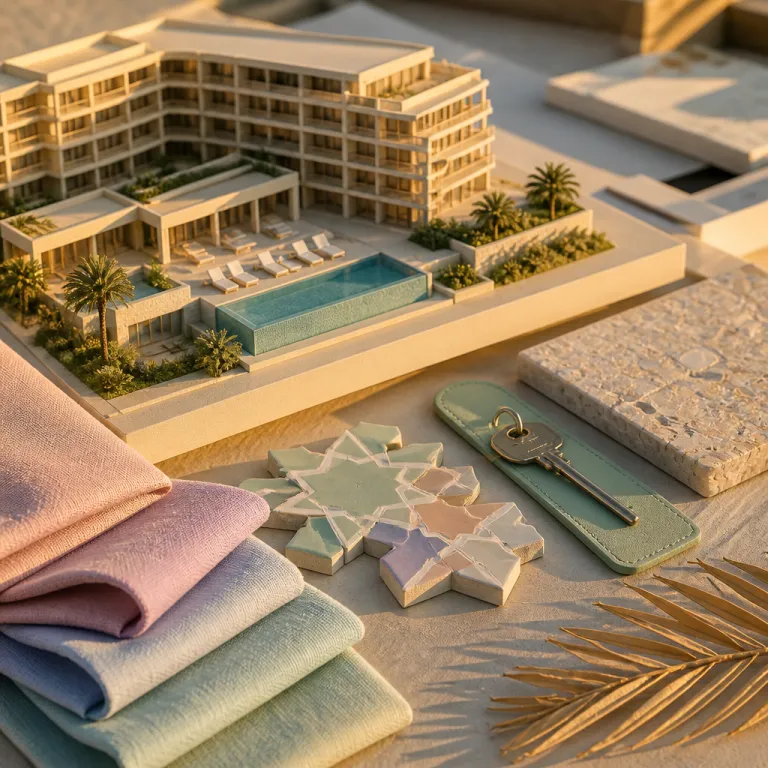
Revenue milestone and what it signals for Tunisia’s luxury tourism
Tunisia’s latest tourism revenue milestone has become shorthand for a structural shift in the country’s hospitality ambitions, especially at the upper end of the market. When tourism receipts reached 3,352 million dinars in the first half of the year—crossing roughly one billion euros—the Central Bank of Tunisia signalled to the international market that the sector now carries renewed financial weight. For investors tracking long term performance in North Africa, that benchmark matters more than any single season’s tourist arrivals headline, because it suggests that higher value travel is starting to take root alongside traditional volume-driven packages.
The Central Bank of Tunisia compiled these figures using financial reporting systems, tourism surveys and analysis of transactions from hotels, resorts and travel operators across Tunis, Sousse, Hammamet and other coastal cities. Its publication from Tunis city confirmed an annual growth in tourism revenues of 4.4 percent, driven largely by higher European tourist arrivals and recovery of traditional markets in the French speaking segment and beyond. In parallel, the Ministry of Tourism has framed this momentum as part of a broader national strategy to strengthen economic stability, diversify income sources and reposition Tunisian tourism further up the luxury tourism ladder; one recent briefing from the ministry described the billion-euro threshold as “a turning point that validates our move towards premium hospitality and more resilient tourism Tunisia revenues.”
For the luxury segment, this symbolic threshold changes the conversation about Tunisia’s tourism industry from short term recovery to long term asset class. International hotel groups and Tunisian owners now read the occupancy rate data not just as a seasonal win, but as justification for new capital expenditure in high end hotels and integrated resorts. That is why forward-looking projections for tourism revenue and the luxury hotel pipeline are increasingly referenced in boardrooms from Tunis to regional investment hubs, where institutional investors and family offices are quietly scanning the Mediterranean for their next destination play. A senior executive at a Tunis-based hotel group recently summed up the mood: “We are no longer asking if Tunisia can support five-star properties; we are asking how quickly we can deliver them without losing our character.”
Where the money comes from: coastal classics, desert luxury and medical tourism
The current wave of high value tourism in Tunisia is not built on a single product, but on a layered mix of coastal leisure, cultural travel tourism and emerging medical tourism. Along the Sahel coast, the Sousse Monastir and Monastir Mahdia corridor continues to anchor mass tourism volumes, yet a growing share of spend now flows into upgraded luxury resorts that sit apart from the traditional all inclusive model. In Nabeul Hammamet and the wider Hammamet bay, thalassotherapy centres and design forward hotels are nudging the destination away from pure price competition with southern European cities, with several properties reporting double digit growth in spa revenue and longer average stays among French and German guests.
Further north, Tunis city and its northern suburbs such as La Marsa and Gammarth are capturing a different type of tourist, one who blends business meetings with high end leisure in restored palaces and discreet urban hotels. These travellers often extend trips into the desert, where Douz and the surrounding Sahara camps are evolving into a premium circuit for international guests seeking sustainable tourism experiences rather than extractive mass tourism packages; for a detailed look at this shift, specialist guides to Tunisia’s gateway to the Sahara map how luxury tourism is reshaping the dunes and highlight new eco-lodges that limit visitor numbers. Medical tourism adds another revenue stream, with Tunisian clinics in Tunis and Sousse attracting patients from Libya, Algeria and increasingly from Saudi Arabia, who then book adjacent stays in luxury hotels; one clinic director in Sousse notes that “around four in ten of our international patients now choose five-star accommodation, often bringing family members who turn treatment into a short holiday.”
Official stakeholders are clear about the drivers behind this revenue surge and its implications for Tunisia’s high end hotel sector. As one policy brief notes without ambiguity, “What contributed to the increase in Tunisia's tourism revenues? Higher European arrivals and recovery of traditional markets.” That same document answers a second question that matters for investors watching the luxury hotel segment: “How is Tunisia's luxury hotel sector responding to increased tourism revenues? By expanding and developing new luxury accommodations.” Recent examples include the repositioning of historic properties in Tunis into five star boutique hotels, the refurbishment of seafront resorts in Gammarth with new suites and conference facilities, and the announcement of new beachfront projects in the Hammamet and Sousse areas targeting higher spending guests with larger room sizes, private pools and dedicated concierge services.
How record revenues are reshaping the luxury hotel pipeline
With record tourism receipts now a reference point, the pipeline of high end properties is shifting from cautious renovation to confident expansion. In Tunis and its northern suburbs, owners are reconfiguring existing hotels to capture higher yielding segments, adding club floors, executive lounges and wellness suites that appeal to business leisure travellers who might also book refined stays near the Vatican through curated Rome hotel guides. Along the coast from Sousse to Nabeul Hammamet, several Tunisian groups are phasing out older mass tourism stock in favour of smaller scale luxury resorts that can sustain better occupancy rates and average daily rates across a longer season; some operators report that renovated five-star units are already achieving occupancy above 70 percent in shoulder months, compared with barely half that level a decade ago.
In the central coastline hub, the Monastir Mahdia axis is emerging as a test case for how Tunisia can move from volume focused tourism Tunisia models to higher value Tunisian tourism anchored in family friendly luxury; recent upgrades to beachfront resorts, expanded kids’ clubs and new wellness offerings are lifting both guest satisfaction and revenue per room. Investors from North Africa and the Gulf, including Saudi Arabia based funds that have publicly expressed interest in Mediterranean hospitality, are watching these cities closely as they compare Tunisia’s tourism sector metrics with those of competing Mediterranean destinations. For them, the key question is whether Tunisia tourism can maintain this trajectory while embedding sustainable tourism practices that protect coastal ecosystems and historic city centres, from the medina of Tunis to the old quarters of Sousse.
Regulators and industry leaders argue that the answer depends on how quickly the market can pivot from short term gains to a long term vision that balances major tourist flows with environmental and cultural stewardship. National strategies now reference not only tourist arrivals and headline revenue figures, but also the quality of travel experiences in Tunis, Sousse, Hammamet and inland cities that rarely featured in earlier brochures. As Tunisia positions itself as a sophisticated destination within North Africa, the next wave of luxury hotels will be judged less on marble lobbies and more on how intelligently they integrate local culture, manage occupancy rate volatility and contribute to a resilient, high value tourism sector; as one hotel manager in Hammamet put it while watching guests gather for sunset over the bay, “If we get the balance right, people will come back not just for the beaches, but for the way Tunisia makes them feel.”